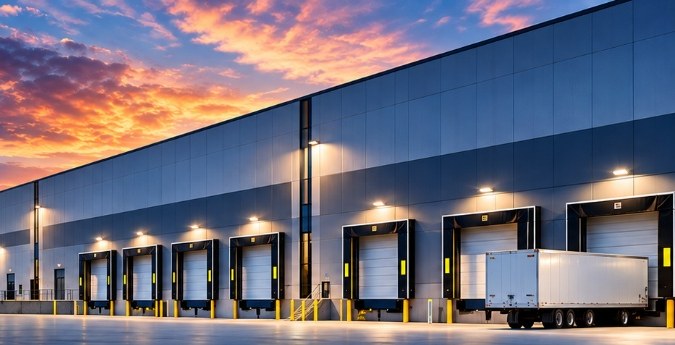
In industrial real estate, finding the right building is only half the battle. Having the right people representing your interests can make all the difference.
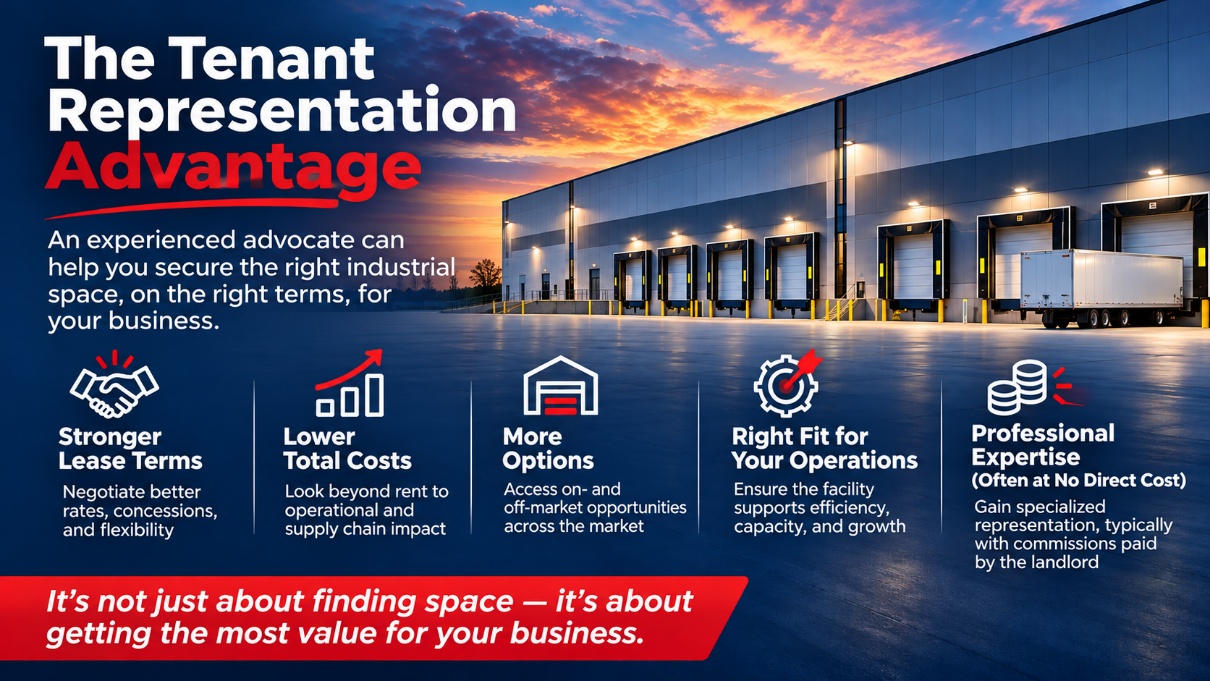
When it comes to industrial real estate, there's an old saying that applies particularly well: Just because a building is available doesn't mean it's right for your business.
Whether you're leasing a 50,000-square-foot warehouse, consolidating multiple distribution centers, or searching for a million-square-foot fulfillment facility, the stakes are significant. The decisions you make today can impact your operational efficiency, profitability, and flexibility for years to come.
And yet, many businesses approach these transactions without one of the most valuable resources available to them: a dedicated tenant representative.
Think of it this way. You wouldn't walk into a courtroom and ask the opposing attorney to represent your interests. So why would you enter a multimillion-dollar real estate negotiation relying solely on the landlord's broker?
That's where tenant representation comes in.
What Exactly Is Tenant Representation?
Tenant representation is a commercial real estate service in which a broker or advisory firm works on behalf of the business seeking space rather than the property owner.
While the landlord's representative is responsible for securing the best possible outcome for the property owner, a tenant representative focuses on protecting the tenant's interests.
It's a simple concept, but an important distinction.
A qualified tenant representative helps identify suitable properties, evaluate market conditions, negotiate favorable lease terms, and ensure that the facility supports the company's broader business objectives.
In industrial real estate, that last point is particularly important. After all, a warehouse isn't simply four walls and a roof. It's the operational heartbeat of a business.
1. Knowledge Is Power — Especially at the Negotiating Table
Industrial real estate markets can be complicated. Rental rates, vacancy levels, operating expenses, construction costs, and landlord concessions vary significantly from market to market.
A knowledgeable tenant representative understands these variables and uses that information to negotiate from a position of strength.
Rising rents and occupancy costs continue to put pressure on industrial tenants, particularly when older leases come up for renewal. Even modest changes in rental rates can have a substantial impact on a company's bottom line — particularly for companies operating large distribution facilities.
A tenant representative can help identify opportunities to negotiate rental rates, improvement allowances, renewal options, expansion rights, and other provisions that influence the total cost of occupancy.
Sometimes the biggest savings aren't found in the advertised rental rate. They're buried in the fine print.
And nobody enjoys discovering expensive surprises on page 47 of a lease agreement.
2. The Cheapest Building Isn't Always the Best Deal
Here's where industrial real estate gets especially interesting.
Imagine two distribution facilities:
- Building A offers a lower rental rate but has limited loading docks, insufficient clear height, and a location that adds significant transportation time.
- Building B costs more per square foot but offers better highway access, greater storage density, improved truck circulation, and a layout that supports automation.
Which building is the better deal?
The answer depends on the overall operational impact.
A strong tenant representation strategy looks beyond the lease and considers transportation expenses, labor availability, material handling requirements, pallet storage capacity, utility infrastructure, and future growth.
For example, a building with 36-foot clear height may accommodate significantly more pallet positions than one with 24-foot clear height, depending on the racking layout, equipment capabilities, and applicable fire and safety requirements.
That additional vertical capacity could reduce the need for expansion or additional facilities.
The goal isn't simply to secure the lowest rent. It's to secure the greatest overall business value.
3. A Little Negotiating Leverage Can Go a Long Way
Let's put some hypothetical numbers behind this.
Illustrative only; assumes fixed base rent, no annual escalations, and excludes operating expenses and other occupancy costs. With identical 3% annual escalations on both rates, the five-year savings would be approximately $265,457.
A reduction of just 50 cents per square foot saves $50,000 annually on a 100,000-square-foot facility. Over five years, that is $250,000 in base rent savings before escalations — even before considering other negotiated concessions.
Now consider additional possibilities: free rent, tenant improvement allowances, caps on certain operating expenses, or greater flexibility to expand or terminate.
These concessions are not guaranteed, but an experienced tenant representative knows what to ask for, how to structure competitive proposals, and when to push.
4. More Options, Fewer Blind Spots
One of the greatest advantages of tenant representation is access to a broader view of the market.
A business searching independently may focus primarily on publicly advertised properties. A well-connected industrial real estate advisor can also identify upcoming vacancies, off-market opportunities, potential subleases, and properties that haven't officially entered the market.
Equally important, a representative can help eliminate properties that look attractive on paper but present operational challenges.
- Is there enough trailer parking?
- Can the floor support the intended racking system?
- Does the clear height and column spacing allow for efficient storage and material handling?
- Are there zoning restrictions?
- Is the electrical infrastructure adequate for future automation?
These questions should be addressed before a lease is signed, not after the moving trucks arrive.
5. Professional Representation Without Necessarily Adding Cost
Here's one of the most appealing aspects of the tenant representation model.
In many commercial leasing transactions, the landlord pays the brokerage commission, which is shared between the landlord's broker and the tenant's representative.
That means tenants can often obtain professional representation without paying a separate brokerage fee directly.
Compensation arrangements vary by transaction, market, and agreement, so they should always be confirmed upfront. But the underlying opportunity is compelling: businesses can gain specialized expertise and negotiating support without necessarily increasing their direct transaction expenses.
6. The Best Tenant Representatives Think Beyond Real Estate
Perhaps the greatest value comes when tenant representation is integrated with operational planning.
For industrial users, a real estate decision is also a supply chain decision.
The ideal representative understands how building design, distribution networks, material handling equipment, automation, labor requirements, and transportation costs fit together.
This is especially relevant as companies reconsider their industrial footprints, weigh newer facilities against existing locations, and look for ways to improve efficiency without unnecessarily increasing costs.
These decisions require more than a list of available warehouses. They require a coordinated strategy connecting real estate to operational performance.
The Bottom Line: It's About More Than Finding Space
Industrial real estate transactions represent some of the most consequential financial and operational decisions a company can make.
The right facility can improve productivity, reduce expenses, support growth, and strengthen a company's competitive position.
The wrong facility? Well, that's a very expensive lesson in the importance of doing your homework.
Tenant representation provides businesses with an experienced advocate, market intelligence, negotiating leverage, and a more comprehensive understanding of their options.
At The Beacon Group, we consider all of these factors, but our approach goes well beyond building size, location, and rental rates. Because of our in-house material handling expertise, we understand how our clients actually operate. We evaluate buildings based on storage capacity, pallet positions, throughput, clear height, column spacing, racking configurations, equipment requirements, and overall warehouse efficiency. A building may look right on paper but still fall short operationally — and identifying that before a lease is signed can make a tremendous difference.