After more than 20 years in business, you learn a few things.
You learn what customers truly value. You learn which trends are meaningful and which ones disappear six months later. You learn the importance of good people, strong relationships, delivering on promises, and occasionally admitting that the way you've always done something might not be the way you should do it tomorrow.
And eventually, you may learn something else:
It might be time for a new logo.
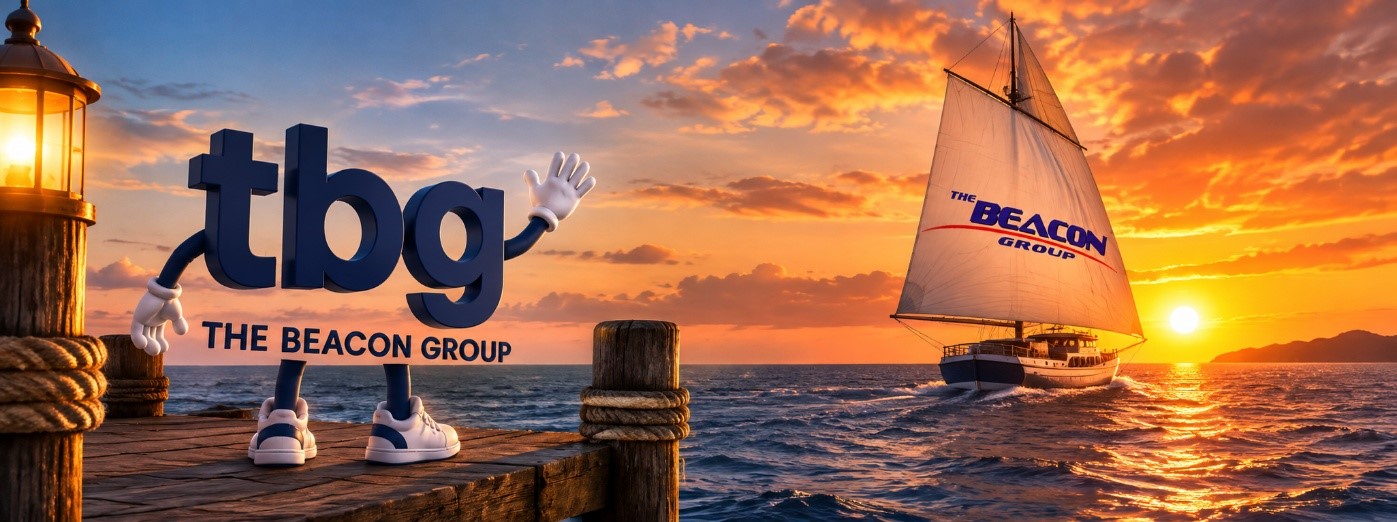
We recently went through that process ourselves, introducing a new brand identity and website after more than two decades in business.
It was exciting. It was energizing. And, like any good corporate branding exercise, it occasionally involved spending considerably more time discussing fonts, colors, spacing, and the precise location of three letters than any reasonable person would have predicted.
But behind the new look was a much more important question:
Does our brand accurately represent the company we have become?
For us, that question made the decision to rebrand much bigger than simply changing a logo.
The Business Evolved. The Brand Needed to Catch Up.
We have changed a lot after all these years.
Our capabilities have expanded. Our team has grown. Technology has transformed the supply chain, logistics, industrial real estate, material handling, automation, engineering, and project management industries in which we work.
Most importantly, the challenges our clients ask us to solve have become increasingly complex.
Today, Beacon provides an integrated approach to industrial and supply chain solutions — from site and building selection through facility planning, material handling systems, automation, engineering, project management, technology, implementation, and ongoing support.
The company had evolved.
Our brand needed to evolve with it.
That realization is probably familiar to many established businesses.
Companies rarely wake up one morning and suddenly become different organizations. Change happens gradually. You add a service. Enter a new market. Hire new expertise. Develop new technology. Take on larger projects. Solve more complicated problems.
Then one day you look at your website or marketing materials and realize they describe a version of your company from ten — or twenty — years ago.
That's when rebranding becomes more than a marketing exercise.
It becomes a business exercise.
Rebranding Doesn't Mean Reinventing Yourself
One of the biggest concerns established companies can have about rebranding is losing the identity they've spent years building.
But a successful rebrand shouldn't erase your history.
It should amplify it.
For Beacon, the objective wasn't to become a different company. It was to create a stronger visual and digital representation of the company we already are.
The experience didn't change.
The relationships didn't change.
The commitment to our clients didn't change.
The people didn't change.
What changed was how we presented those things to the marketplace.
That's an important distinction.
Your company's history is an asset — not something you want to discard because somebody discovered a particularly exciting new shade of blue.
A good rebrand respects the past while preparing the company for the future.
Your Digital Presence Is Now Your Front Door
Twenty years ago, a company's first impression might have been a salesperson, a brochure, a trade show booth, or a business card.
Today, there's a very good chance it's a website.
Before someone calls your company, they search for you.
Before a prospect accepts a meeting, they visit your website.
Before a potential employee applies for a job, they check LinkedIn.
Before a prospective client reads your proposal, they may already have formed an impression of your organization based entirely on what they saw online.
That's why an outdated brand can unintentionally send the wrong message.
If your company is providing sophisticated, technology-driven solutions but your digital presence looks like it was designed when everyone still printed MapQuest directions, there is a disconnect.
Your brand doesn't need to chase every design trend.
It simply needs to accurately communicate the quality, professionalism, expertise, and capabilities of the organization behind it.
Rebranding Forces You to Answer Important Questions
Perhaps the most valuable part of a rebranding process isn't designing anything.
It's thinking.
A rebrand forces leadership to answer fundamental questions:
- Who are we today?
- What do we do best?
- Why do customers choose us?
- What makes us different?
- What do we want to become over the next decade?
And perhaps most importantly:
Are we telling that story clearly?
For Beacon, the process reinforced something we have believed for years: clients increasingly want integrated solutions rather than a collection of disconnected vendors.
Industrial real estate decisions affect facility design.
Facility design affects material handling.
Material handling affects automation.
Automation affects technology.
Technology affects operations.
And every one of those decisions affects cost, efficiency, scalability, and ultimately business performance.
Our new brand needed to better represent that integrated approach.
A New Brand Can Create New Energy
There is also an unexpected benefit to rebranding:
It creates momentum.
Employees become excited about the new identity. Sales teams have better tools. Presentations become more consistent. Marketing becomes more focused. Recruiting improves. Clients notice the change.
Suddenly, people who haven't thought about the company logo in years have very strong opinions about the company logo.
And that's actually a good thing.
It means people care.
A successful rebrand can remind an organization that while it should be proud of where it has been, it should be equally excited about where it is going.
Same Beacon. New Look. Next Chapter.
At The Beacon Group, we're proud of what we've built over more than 20 years.
We're equally excited about what's ahead.
Our new identity isn't intended to replace our history. It represents the next chapter of it.
The same experience.
The same relationships.
The same commitment to solving complex industrial and supply chain challenges.
But with a brand and digital presence that better represent who we are today — and where we're going tomorrow.
For other established businesses considering a similar change, the lesson from our experience is simple:
Twenty-plus years is a long time for a business.
It's also a long time for a logo.
And if yours has survived flip phones, fax machines, dial-up internet, BlackBerrys, MapQuest, CD-ROMs, and the phrase "Can you fax that over to me?"…
Give it some credit.
It had a pretty good run.